Monday, December 10, 2012

Hanging Off The Fiscal Cliff? What Will 2013 Bring To The Massachusetts Real Estate Market?

High Anxiety Heading Into 2013 - by RICH VETSTEIN on DECEMBER 9


The term Fiscal Cliff should be as ubiquitous as “Merry Christmas” and “Happy Holidays” through the year-end, especially if President Obama and Congress cannot work out a deal to resolve the more than $500 billion in tax increases and across-the-board spending cuts scheduled to take effect after Jan. 1, 2013. If there is no deal, and the country goes over the fiscal cliff, the consensus is that it will have quite a negative effect on the economy and the real estate market in particular. (I debated using the word “disastrous” because there is a segment of commentators who say the housing market may survive a fall off the cliff).
There are four particular aspects of the Fiscal Cliff which could impact the real estate market.

Read the rest of the article here:Hanging Off The Fiscal Cliff? What Will 2013 Bring To The Massachusetts Real Estate Market?

Friday, November 16, 2012

Salem Awarded Best Shopping in Massachusetts


This is just one of the many reasons why Salem is the best towns and communities in Massachusetts to buy a home and live. Downtown Salem condominiums go under agreement very quickly after coming on the market, and any property within walking distance of the downtown is in high demand. Combined with easy access to the commuter rail, a bustling waterfront district and a thriving arts community, it's easy to see why it's the destination for everyone people of all ages. 

The city of Salem can now officially be called the best place to shop in 2012. The 15th Annual Retailers Association of Massachusetts 2012 Award of Excellence (RAMAE) for “Best Shopping District” was presented today to Mayor Kimberley Driscoll and to Rinus Oosthoek, the Executive Director of the Salem Chamber of Commerce.
This was the first year an excellence award for the “Best Shopping District” award category was presented. The Retailers Association gave Salem the award for: “The hip, new magic of Salem: its eclectic eateries and charming boutiques, and the fact that over 60 new downtown businesses have opened in the last three years alone. Salem’s bustling farmers market often attracts thousands of customers weekly, and Salem’s restaurant scene is booming. One of the top 20 art museums (soon one of the top10!) in the U.S., the Peabody Essex Museum, is located in downtown Salem, as is the Salem Witch Museum.  Salem Film Festival (all documentary), Spring and Fall Restaurant Week, Salem Jazz & Soul Festival, Salem Gay Pride Parade, Salem First Friday, Salem Maritime Festival, Haunted Happenings (Salem’s fifth season), Mass Poetry Festival, Salem Art Festival , and  Salem’s So Sweet Ice Sculpture Festival are just some of the reasons to visit Salem!”
Also present at the Award Ceremony were Sandy Heaphy, Salem Chamber president and owner of the Kensington Stobart Gallery, and RAM members George Carey (Finz Seafood Restaurant), David McKillop (Rockafellas), Dan Shuman (Salem Cycle), and Mark Leavitt (Salem Car Wash).

The RAM Awards of Excellence were created in 1998 by retail expert Rick Segel, a RAM board member, retail trainer, and distinguished author.  The RAMAES were developed as a way to acknowledge retail excellence in the Commonwealth. Throughout RAMAES history, large and small, new and veteran retailers, and local gems and national players from all corners of the state have been honored and given the recognition they deserve for their involvement in the community and retail industry.
The Retailer’s Association of Massachusetts (RAM) is a statewide trade association with over 3,000 member companies. To learn more about the RAM, the RAMAES, past winners, and/or how to get involved call (617) 523-1900 or go to www.retailersma.org. 
The mission of the Salem Chamber of Commerce is to make Salem a better place to live, work, and do business. The Salem Chamber serves as the voice for member businesses, representing, advocating and working to enhance the business and civic environment.  With over 600 members, it is the largest business organization in Salem. For more information about the Salem Chamber, please call 978-744-0004, or visit www.salem-chamber.org.

Saturday, November 03, 2012

Buyers, Not Sellers at Showings


A delicate subject I sometimes have to approach with clients selling their home is the importance of steering clear of showings and open houses while prospective buyers are touring their home.

It can be touchy. After all, how do you kick someone out of their own house? Many buyers are anxious about the showing and open house process. They feel the need to hover in the wings, which I understand. There are several reasons why this is not the best idea.

Four Reasons Why Owners Sticking Around for a Showing/Open House is a Bad Idea:

1. I've had experiences where prospective buyers have actually passed on a showing once they've found out the current owners were home.

2. It’s important that buyers be able to visualize the home as "theirs already." They need to be able to imagine living in the house, which is pretty tough to do with the owners making a sandwich in the kitchen.

3. Presence of a seller makes the prospective buyer feel guilty for "judging" the home. If the buyer isn't given free range to evaluate the home, the doubt is enough to put them off the property entirely.

4. If all goes well, the buyer may want to stay for a time at the house and chat with the agent. This is a good sign (it means the buyer may be moving towards an offer), but with the seller present, it's all but impossible.

I try not to offend my clients when I ask them to understand these reasons. While I empathize with the nervousness that accompanies the sales process, my goal is the smooth sale of their home. A little space for the prospective buyers is an important ingredient.

Stress-free showings are just one part of my approach to marketing your home to sell. Get in touch and I’d gladly show you what else I can do to get you top dollar for your home - Jim Armstrong 978-394-6736

A Heads Up on Down Payment Gifts


Ready to buy your first home? Have a down payment ready to go? Before you apply for that mortgage, here’s something you should know about disclosing the source of your down payment.

Q: Part of my down payment was a gift from my parents. How will this impact my mortgage application?

A: It depends on the type of mortgage you’re applying for.

You should be prepared to explain your gift with documentation. While FHA loans typically will permit a down payment from a family source, your more conventional mortgage will expect at least 5% of the funds to have come from you.

One of the keys to ensuring this process goes smoothly is having documentation to back up your claim. Bank statements showing the source of the money (and when you received it) are a good place to start, along with a letter signed from your generous benefactor declaring the gift.

As a rule, you should be careful of any large deposits to your account (besides your regular pay).

I urge you to talk to a mortgage professional for complete details as they pertain to your specific situation.

Need a referral to a qualified mortgage broker? I’d be glad to share with you the names of people I know and trust. Contact me today for a referral: Jim Armstrong - 978-394-6736

Don't Count on Election to Boost Housing


The last economic data to be released before the election has given no advantage to either candidate. We did pick up171,000 jobs in October, a little better than forecast, and revised up another 84,000 in prior months.
However, the average workweek was unchanged for the fourth month in a row, and hourly earnings fell slightly, over the last year rising only 1.6 percent. "U-6" -- the measure of unemployment including "involuntary part-time" -- is still 14.6 percent.
On net a brighter sign than the jobs report: the ISM survey of manufacturing in October crawled 0.2 further into positive ground at 51.7.
Markets are flat, I think suppressed more by the election than anything, although stocks are clearly hurt by diminished earnings. Foreign action has also been muted and deferred by our election, especially in Europe.
So, Wednesday morning -- assuming we know the election results by then -- how will events and markets break from months of unnatural quiet?
1. We'll know by then. The 2000 election was a coin toss like this one, but the damned thing won't land on its edge again ... not twice in four tries.
See the rest of the article at Inman News: http://www.inman.com/buyers-sellers/columnists/loubarnes/dont-count-election-boost-housing

Friday, October 19, 2012

How Does the 3.8% ObamaCare Tax Affect Real Estate?


In an effort to keep everyone who has an interest in real estate informed, here are a couple of links to information about the Health Care Reform Act (aka ObamaCare) tax that a lot of people are talking, and have misconceptions, about. It is opposed by the National Association of Realtors. It was added  into the health care law at the last minute and was never considered in hearings. The tax will no doubt be debated during the upcoming tax reform debates in 2013..

This is a video of NAR's director of tax policy, Linda Goold, who does a great job of explaining how the tax will affect real estate sales.

Here is the Ten Top Things You Need to Know About the 3.8% Tax

Basically it will not affect 98% of real estate transactions. It may affect people who have rental income and gains from the sale of investments if they have an adjusted gross income of over $200,000 ($250,000 if married).

Jim

Wednesday, October 03, 2012

FHA Softens Condominium Lending Guidelines, But Barriers Remain


Condo Sales May Get Slight Boost, But Financing Rules Remain Tight
Responding to lender, condominium association and consumer outcry that the existing FHA condominium lending guidelines are too strict, the Federal Home Administration (FHA) on September 13, 2012 announced a round of changes which will hopefully make it easier for borrowers to qualify for FHA condo loans. The full FHA announcement can be found here.
While some of the changes are a step in the right direction, I think overall they are a mixed bag, as FHA left some of the most onerous provisions intact. I’m skeptical that these new changes will have a major impact on condominium sales, but of course, any loosening of the strict requirements is a good thing.
Condo Fee Delinquency Rule Increased to 60 Days Overdue
FHA is softening its stance on delinquent monthly condo fees and home owner association (HOA) dues. FHA is now allowing up to 15% of a project’s units to be 60-days delinquent on condo fees, up from just 30 days delinquent under the prior rule. This change acknowledges the depressed economy which has caused many condo unit owners to have trouble paying their condo fees. This is definitely a good change.
Expanded Investor Purchasing Allowed
Under the new rules, investors can come in and buy more units in a project than they could previously. They can now buy up to 50% of the project units, up from just 10% before, but with an important caveat:  the developer must convey at least 50% of the units to individual owners or be under contract as owner-occupied.
See the rest of the article here: FHA Softens Condominium Lending Guidelines, But Barriers Remain

Thursday, August 30, 2012

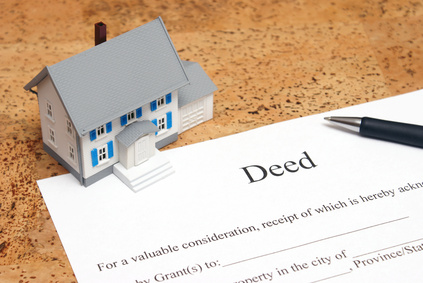
Title Problems That Can Kill Your Real Estate Closing|deed,appraiser

by Daniel Doran

There is a poster I keep in my office entitled “The real estate closing”, and it’s made up of three panels. The first panel has all of the participants in the closing sitting straight up in an orderly fashion in a rowboat with oars ready to get started. The appraiser, the lender, the real estate agents, the surveyor, etc are all there. The title closer is at the front of the boat with a megaphone and says “We’re all ready now. Start the closing.”

 The next panel shows everyone in the boat paddling hard in all different directions. The last panel shows them thrown all over the boat, hanging over the sides with the oars sticking up at all different angles and the title closer saying into the megaphone. “What time is good to reschedule?” Unfortunately this poster, while humorous, is all too often accurate. There are so many things that have to line up just right to have a successful real estate closing. One of the main things is getting clear title. Here are two of the most common title problems that can kill your deal.

To see the rest of the article, go to:
http://realtybiznews.com/title-problems-that-can-kill-your-real-estate-closing/98715089/

Three Ways to Give Energy Savings the Green Light in Your Home

ARA) – “Red means stop, green means go” – we learn that axiom as children. When it comes to home energy costs, however, going green can help homeowners put a stop to runaway utility bills. And maximizing your home’s use of natural light – call it “green lighting” – is a great way to boost your home’s energy efficiency.
Here are three ways you can put Mother Nature to work, and use natural light to lower your energy costs:

Minimize use of artificial lighting
Anyone who’s ever paid an electrical bill knows that the simple act of turning on a light can directly impact your monthly expenses. Homeowners looking for a long-term way to power down their lighting costs may consider Energy Star-qualified skylights a good investment. While skylights' cosmetic appeal can’t be argued, their value goes far beyond good looks.

By admitting natural light into your home, skylights can help reduce use of artificial light sources – and help you save on electricity costs. Pair powered venting skylights that come with automatic rain sensors with efficiency-enhancing accessories like designer blinds (available in a varied palette of colors and patterns), and you can improve energy efficiency as much as 37 percent, according to skylight manufacturer Velux America. And, with tubular products like Sun Tunnel skylights, you can even bring natural light into ground-floor rooms or spots where a traditional skylight may not work, such as a first-floor powder room, hallways, or walk-in closets.

Reduce hot water costs
Long gone are the days when solar powering your home was an idealistic, but impractical dream. Solar technology is more useful, accessible and cost-effective than ever. Solar water heating systems are becoming mainstream, and offer homeowners a great, green way to trim energy costs. What’s more, the cost of installing these systems has been steadily declining as the technology advances, and you may find adding one makes you eligible for tax credits or incentives from your local, state or the federal governments. You can calculate the costs and possible paybacks online at www.veluxusa.com.

Make home a healthier place
Every year, ill health costs the U.S. economy billions of dollars, experts say, and your own health woes can have a significant impact on your pocketbook. The health benefits of natural light are well-documented, from reducing the symptoms of Seasonal Affective Disorder (SAD) and promoting the body’s production of Vitamin D, to improving mood and even learning ability.
Simply opening blinds and curtains to admit more natural light can directly affect the mood inside your home – not to mention the mental state of the people living in it. Take your green lighting efforts to a higher level by adding venting skylights, and you can also help improve the air quality inside your home. While skylights admit ample natural light, their natural chimney effect works with your windows to bring in and circulate much more healthful fresh air. They also passively vent fumes and dampness that can lead to mold and mildew.
By incorporating natural light and passive ventilation into their home decor and improvements, homeowners can put the brakes on rising utility costs – and give the green light to energy savings.

Thursday, August 23, 2012

Price Gains Lift 400,000 Homes Above Water

Home price increases helped more homeowners regain some equity in their homes during the second quarter, according to an analysis by Zillow.

Massachusetts Homes Getting Above WaterZillow's Negative Equity Report estimates that 30.9 percent of homeowners with mortgages owed more than their homes were worth at the end of June, down from 31.4 percent at the end of March. That translates into 15.3 million underwater homes -- about 400,000 less than three months before.

The report -- which compares Zillow's automated home valuation "Zestimates" for individual homes with actual mortgage loan balance data from TransUnion -- showed all but one of the 30 largest markets tracked by Zillow saw a quarter-over-quarter improvement in their negative equity rate.

In the Boston area, the percentage of homes under water was significantly less than the national average, with only 19.6% of homeowners having negative equity. That's down from 22% at the end of the 1st quarter of 2012. That means over 80% of people have equity in their homes in this area - great news if you are planning on selling your home soon.

See the entire article at:
Price gains lift 400,000 homes above water | Inman News

Wednesday, August 22, 2012

Price Your Home to Sell Quickly


If home lacks features of recent comps, it's time to subtract value.


A first-quarter survey of homebuyers and sellers done by HomeGain.com, a real estate services website, revealed that 76 percent of homeowners believe their home is worth more than the list price recommended by their real estate agent.

Homebuyers usually have a better grasp of current market value in the area where they're looking to buy than do sellers who own and live there. Buyers look at a lot of new listings. They make offers, know what sells quickly and for how much, and what doesn't and why. HomeGain reported that homebuyers still think sellers are overpricing their homes.

Your home is worth what a buyer will pay for it given current market conditions. This may not be the same as your opinion of what your home will sell for, or what you hope it's worth. Relying on emotion rather than logic when selecting a list price can lead to disappointing results.

The prime opportunity for selling a home is when it's new on the market. This is when it is most marketable. Buyers wait for the new listings. Usually, listings receive the most showings and have the busiest open houses during the first couple of weeks they are on the market.

The rest of the article continues here:
Price your house to sell quickly | Inman News

Tuesday, August 14, 2012

Tips For a Relocation Visit


Are you considering a move to a new city? Maybe you’re trying to make the choice between two or three potential options. If so, how you visit your future home can have a dramatic impact on which one makes the final cut.

By making a few subtle shifts in how you prepare for your visit (and how you spend your time while you’re in town), you can gain more useful insight into the community.

Tip 1: Stay a week if possible
While a long weekend might be your only shot, you can get a much better perspective on a place if you have enough time to unwind. A mix of weekdays and a weekend is a great way to get a view of the rhythm of the town. If you have a long time to plan, visit the place in Summer versus Winter, too.

Tip 2: Rent an apartment or house
A family living in a hotel is expensive and automatically puts you “outside” the community. With a little more room and the facilities of a real living space, you’ll get a better sense of what it might be like to “really be there.” Plus, avoiding the hotel will keep you off tourist-trap areas and hopefully away from major highways.

Tip 3: Explore some on foot
Driving aimlessly can be a good “survey” technique (and indeed, getting lost is a good idea, too), but walking neighborhoods and downtown districts will give you a vivid sense of the community.

Tip 4: Get the local low-down
Before you go, find friends-of-friends on Facebook and other social media sites who can give you an idea of the must-see places that locals love. Use this list as your guide, not the tourism brochures.

Tip 5: Pay attention to what matters to YOU
Remember: You’re the one thinking of living there. Don’t let what others see as the main benefit to the town be what guides your decision to live there. Go with your gut, your values, and your comfort level!

By the way, I’m glad to help you sell your home prior to the move, or refer you to a trusted agent in your destination city. Just get in touch! - Jim Armstrong 978-394-6736 

Thursday, August 02, 2012

City of Boston Changes Smoke Certification Rules


As of August 1, 2012, the City of Boston will no longer provide smoke certificates for any property built after 1975, or for any property regardless of age that contains 6 or more units. The reasoning they use is that in 1975 all new construction was required to have hard wired smoke detectors. You can see the regulations below.

http://www.cityofboston.gov/Images_Documents/CoC%20changes%20to%20realtor%20assoc%207%2017%2012_tcm3-33257.pdf 

The state law actually does not require properties built after 1975 to be inspected before being sold. I was unaware of that, and was always told (by fire department officials and others) that Mass state law required all residential properties to have a smoke cert when transferring ownership. You learn something new every day in this business. The Boston Fire Department will still inspect all properties for carbon monoxide detectors, but will issue a certificate that only says CO was checked, not smokes. If they happen to observe something wrong with the smoke detectors while they are there inspecting the CO's they will issue an abatement (whatever that is???!!!)

How does this affect real estate agents in Salem and on the north shore? Well, it really doesn't unless you are listing a residential property in Boston. But how many cities and town will follow Boston's lead? The other issue is that all lenders require a smoke certificate at closing. You will have a CO cert., but the City of Boston says if the lender requires a smoke cert. they will not issue it and you will have to get it through a third party.

The smoke detector laws are complicated enough with the requirements of the correct placement of ionization, photoelectric and dual technology units, and especially when you take into consideration the variances in the requirements between the different towns. It could just get a little more tedious now if the northshore Massachusetts towns adopt Boston's rules.

Jim Armstrong

Wednesday, August 01, 2012

Home values rise for the first time in five years

NEW YORK (CNNMoney) -- Home prices hit a bottom and are finally bouncing back, according to an industry report released Tuesday.
Nationwide, home values rose 0.2% year-over-year to a median $149,300 during the second quarter, the first annual increase since 2007, real estate listing site Zillow reported. Prices were up 2.1% from the first quarter.

See the rest of the article at: Home values rise for the first time in five years - Jul. 24, 2012

Tuesday, July 31, 2012

Case-Shiller Home Price Index Up Sharply

Home prices rose sharply in May cutting the year-year drop in prices to 0.7 percent from 1.4 percent in April, Stand & Poor’s reported Tuesday in its Case-Shiller Home Price Index. Prices in the 20 cities surveyed rose 2.2 percent month-month, the strongest month-month gain since the 20-city index began in January 2000.


See the Case-Shiller home price report here.

Tuesday, June 19, 2012

My Network Can Help You


Usually when agents start talking about referrals, people assume they’re hunting for new listings or more buyers to represent. This isn’t one of those posts!

In fact, I wish more people would come to me looking for referrals in the community. A good real estate agent knows people in the community you can trust, and I’m always happy to provide the connection.

If you think about it, agents pretty much interact with all of the people dedicated to protecting, improving, or maintaining your biggest asset: Your home. Whether it’s a local insurance agent, an honest contractor, or a crack crew of yard and maintenance people, agents are great sources of “who you should know.” (We’re also reliable sources of locals-only community info!)

It’s too bad that agents are often involved only in the sale or purchase of a house. I prefer to think of myself as a lifetime consultant to my clients, and providing the names of people I would stake my reputation on is simply a part of my ethical obligation to serve.

So, by all means, if you’re looking for someone in the Salem, Beverly, Peabody, Danvers, Marblehead area, do drop me a line. I’d be more than happy to help.

Jim Armstrong

Tuesday, May 15, 2012

9th Circuit Court Upholds Right to Discriminate in Roommate Case

by Bob Hunt

"There's no place like home. In the privacy of your own home, you can take off your coat, kick off your shoes, let your guard down and be completely yourself. While we usually share our homes only with friends and family, sometimes we need to take in a stranger to help pay the rent. When that happens, can the government limit whom we choose? Specifically, do the anti-discrimination provisions of the Fair Housing Act ("FHA") extend to the selection of roommates?"

See the rest of the article at:
Realty Times - 9th Circuit Court Upholds Right to Discriminate in Roommate Case

Wednesday, April 25, 2012

Tips on Buying & Financing Your First Home

For many younger Americans, the dream of owning their first home is alive and well. But for others, it's still an elusive dream.

Only five years ago, it was relatively easy to finance a home, but the Great Recession and the mortgage market's meltdown have made it difficult for many people to qualify for home loans. The shifting state of home values and prices has complicated matters. In some markets, values have plunged by more than 40 percent. While that has created once-in-a-lifetime opportunities for younger people to enter the real estate market, others have taken a more cautious approach, waiting to see if prices will continue to fall.

Whether you're ready now or will be down the road, buying your first home takes preparation. Here are some tips from FindLaw.com, the nation's leading website for free legal information, on how to get started.

Save aggressively for your down payment. Many first-time homebuyers seek a mortgage insured by the Federal Housing Association, which insures loans made by lenders for qualifying homebuyers. The program allows buyers to put down as little as 3.5 percent of a home's cost. However, if the home you want to buy doesn't qualify for the program, you'll need to obtain a conventional loan, which will require you to put down anywhere from 10 to 20 percent of the purchase price as a down payment to qualify for a mortgage.

Get your finances in order. Lenders are now taking a closer look at debt-to-income ratio (percentage of monthly income that goes toward debt payments) and housing-to-income ratio (percentage of monthly income that goes toward housing payments). In general, responsible lenders follow the 28/36 percent rule - no more than 28 percent of your monthly income should go to housing costs, and no more than 36 percent of your monthly income should go to debt (including auto loans, credit cards and other loans).

Clean up your credit report. Your credit score is critical to a mortgage application. The higher your score, the more likely you can qualify for a mortgage and obtain favorable terms (a lower down payment and lower monthly payments). By law, you can request one free credit report per year through one of the three major credit bureaus, Experian, Equifax and TransUnion. You should request your report to review your score and correct any mistakes well before you apply for a mortgage.

Don't apply for credit. Keep in mind that a mortgage lender is determining your ability to pay back a mortgage up until the minute you sign the mortgage papers. In general, it's not a good idea to take on more debt such as an auto loan or a new credit card within a year of buying a home.

First-year expenses. First-time homebuyers can be so focused on trying to put together a down payment that they sometimes forget about the expenses that go into setting up a household. You should consider putting away an additional $5,000 to $10,000 for expenses such as a lawnmower, furniture and basic decorating, and for potential repairs involving your furnace, air conditioning, water heater and other appliances.

Shop around. It's important to shop around to get the best home possible for your dollar. And likewise, it's critical to shop around for a mortgage too. Get at least three to four proposals from different mortgage lenders before deciding on the best offer.

Don't expect your dream home. Many first-time homebuyers purchase what's called a "starter" home or a "fixer-upper." While these are often relatively small and need some repairs, they're also an opportunity to enter the real estate market and build sweat equity. To spot a starter home, look for one that needs some love and attention in a neighborhood with houses that are well maintained or being remodeled.

Hire an attorney. If you purchase a home directly from the seller without the assistance of a real estate agent, an experienced real estate attorney can help you write up a purchase agreement, according to FindLaw.com. Some sellers may be interested in this option, because it can save them thousands of dollars in commission fees. A real estate attorney also can counsel you on dealing with legal problems that can arise during the process of buying a home, such as during the title search.

Home inspection. Even if you've come across the deal of a lifetime, never buy a house without a home inspection. An inspection will alert you to potential problems that may not be obvious to a person buying his or her first home. It also may be useful if you need to sue the seller for concealing problems with the home.

To learn more about how to buy your first home, visit http://armstrongfield.com/homebuyer/index.html

Tuesday, April 24, 2012

Kids Becoming Home Owners?


I’m going to go out on a limb here and guess that when you were fourteen, you weren’t thinking about buying your first home. Well, believe it or not, there’s a young girl in Florida who has taken advantage of this incredible buyer’s market. 

14-Year Old Becomes Homeowner and Landlord

“Instead of using her $6,000 savings to buy an iPad, Willow Tufano bought herself a distressed property. And now she’s renting it out. Willow got help from her mother, who doubled her investment. Together, the two spent $12,000 to buy a 3-bedroom Florida short sale that, in better times, was valued at $100K. Now they are partners, since Florida requires a homeowner to be at least 18 years of age, but Willow plans to buy her mother out as soon as she can so she can own the home outright when she reaches the legal age.”

Admittedly, it’s a pretty incredible story, and certainly not the norm. But right now I’m seeing a lot of market activity which suggests that, despite what you read in the media, we may see see an uptick in sales and pricing on the North Shore. I think fear has been holding back a lot of people from seeing clear investment opportunities, and well, sometimes it takes the wisdom of a child to help us see the way!

Thursday, April 19, 2012

March 2012 Home Prices Up 2.5% over 2011

March 2012 existing home prices were up 2.5% over the same period in 2011. The number of homes sold was also up 5.2% over last year, but down from February 2012.

 We have recently been seeing inventory levels of real estate for sale in Massachusetts lower than they have been in a long time, which can make it a little more difficult for home buyers to find exactly what they are looking for. When they do find it, chances are there are several other buyers looking for the same property. This creates competition, hence we are seeing slightly higher home prices. We are seeing more bidding wars going on and more properties being sold over asking price. Mind you, these are the properties that are priced correctly for the market in the first place.

With the number of home buyers out there, if you are selling your home and you do not receive an offer on your property within 30 days, then it is overpriced. In fact in most cases, if you do not receive an offer on your home within 2 weeks, chances are that your home is not priced correctly. Today's home buyers are very knowledgeable about where property prices should be. On the average, they will take 45-60 days doing research online before they even go out to look at their first home. If your property is not priced right, you lose that buyer, who will most likely buy something else before you adjust your price to the correct market value.

Most people don't realize that pricing is part of real estate marketing. In fact, it is the most important part. If you do not price your home correctly I don't care how much promotion & advertising you do - it is not going to sell. Look at any other product for sale. Pricing is critical to it's success. Of course pricing a home, especially in this market,  is a lot more difficult than setting a price for most products because every property is different. That's why I say that determining the value of a home, either through an appraisal or a market analysis, is 75% science and 25% art. A lot depends on the knowledge of the individual performing the valuation, and the market conditions.

Jim Armstrong